Podcast in English
Text size
Bulgarian National Radio © 2026 All Rights Reserved

Folk Studio – the Legendary Bulgarian Lion

The lion is the national symbol of Bulgaria depicted on the country’s coat of arms. Bulgaria’s currency is the lev, the name originally deriving from the Bulgarian word “luv” meaning “lion” in English. What does Bulgarian history have to say about the legendary Bulgarian lion? Where do we find its images? Stay with us and today’s edition of Folk Studio to hear the story.

Since time immemorial, the lion has embodied power and authority. It is called “the king of all beasts” all over the world, its image being the most popular attribute of power and dignity. In many a nation’s mythologies, the lion is most consistently depicted God’s invincible messenger. It stands for success and magnificence, symbolizing the positive traits humans aspire to.

Interestingly enough, Bulgarian traditional mythology abounds in folktales where the king of animals is easily outwitted by much smaller and weaker creatures. The most widespread stories are those where the lion is defeated by the human wit. And yet, the lion also symbolizes supreme divine power, generosity, prudence and justice. It is an emblem of Bulgaria’s stateliness and hence a part of the nation’s official culture, its image appearing mostly in representations of kings and millitary commanders.

In Bulgaria, the lion features on numerous historical monuments. The oldest images, found on slates in the city of Stara Zagora, date back to 9-10 century AD. A lion is depicted on The Madara Horseman- an impressive medieval rock relief carved into a towering rock plateau in North Eastern Bulgaria, which is on UNESCO’s World Heritage List. In the Middle Ages Bulgarian kings, such as Ivan Shishman, one of the last rulers of the Second Bulgarian kingdom, celebrated the lion as a symbol of power.

In the time of Bulgarian national awakening in the years of Ottoman bondage, the lion was considered and widely used as a major national symbol. Paisii of Hilendar, a discerning monastic and a key Revival figure, mentioned in his ground-breaking tome History of the Slavs and Bulgarians that Bulgarians had a lion on their kings’ royal seal: a symbol of the bravery, courage and invincibility of Bulgarian warriors, who fought “like lions”.

Lion images on revolutionary flags, used in the 1876 freedom-seeking April uprising, provide a proof that the lion was indeed considered a national symbol. In the immediate period leading up to the revolt, revolutionary flags were made, featuring a golden lion rampant and the motto ”Freedom or Death”. These flags, most often hand-made by local teachers or icon painters, have been preserved in Bulgarian museums to the present day. Most flags were made of green silk and had a painted or embroidered lion on them, in a heraldic posture and trampling over the Crescent- the symbol of the Ottoman Empire. The same image can be seen on items of one-time rebel outfits such as hats and buttons. In Bulgarian folklore and Revival Literature, these lion depictions were called lion signs attributed to the Bulgarian revolutionaries´ image. “Young Bulgarian heroes...lion signs on their foreheads, fire blazing in their eyes”, says a most popular Bulgarian Revival period song.

English version: Vyara Popova
По публикацията работи: Albena Bezovska


Последвайте ни и в Google News Showcase, за да научите най-важното от деня!
Listen to the daily news from Bulgaria presented in "Bulgaria Today" podcast, available in Spotify.

More from category

Online catalogue of Bulgarian folk songs and dances "sets off" on a European tour

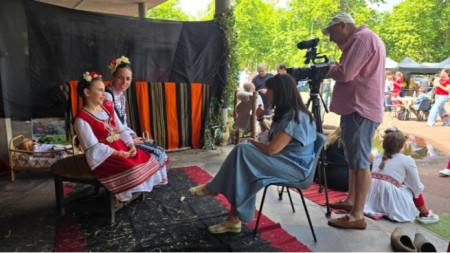
On 22 November, the Association of Bulgarian Folk Ensembles Abroad (ABFEA) will present its project, 'Online Catalogue of Bulgarian Horo and Other Dances', in three European cities: Lyon, Munich and Copenhagen. 'Our goal is to preserve Bulgarian..
published on 11/22/25 10:40 AM

The rhythm and energy of Bulgarian folklore have the power to create a community

‘The Bulgarian horo is a kind of magic — an enchanted circle that pulses with the unique energy of our spirit, our traditions and our identity,’ says journalist Milena Milotinova, who recently presented her new documentary The Magic of the Bulgarian..
published on 11/15/25 7:55 AM

Momchilgrad enchants Sofia residents with Rhodopean flavors and folklore

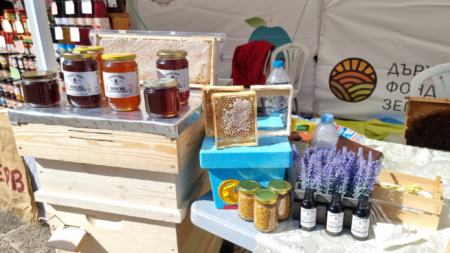
The Eastern Rhodopes come to life in the heart of Sofia – with authentic flavoуrs, music and craftsmanship . Residents of the Bulgaria capital have a chance to immerse themselves in the atmosphere of Momchilgrad Municipality and its cultural and natural..

published on 10/4/25 7:15 AM