A stable and predictable business environment and simplifying start-up and business management procedures to the maximum would create conditions for economic growth, more tax revenues and opportunities for the people who are not all that enterprising to live a better life. These are the components needed for making any progress, and for the country to continue its development, says former banker Levon Hampartzoumian, now president of the Bulgarian Business Leaders Forum. In his words the glue that binds all of these elements together is education:
“The only way Bulgaria can offer competitive advantages is by having an educated, disciplined and motivated workforce. That is something we must never forget, because we shall never become an oil country, nor are we going to find any significant natural resources on our territory. They are not enough to feed 7 million people who are not in possession of skills and knowledge.”
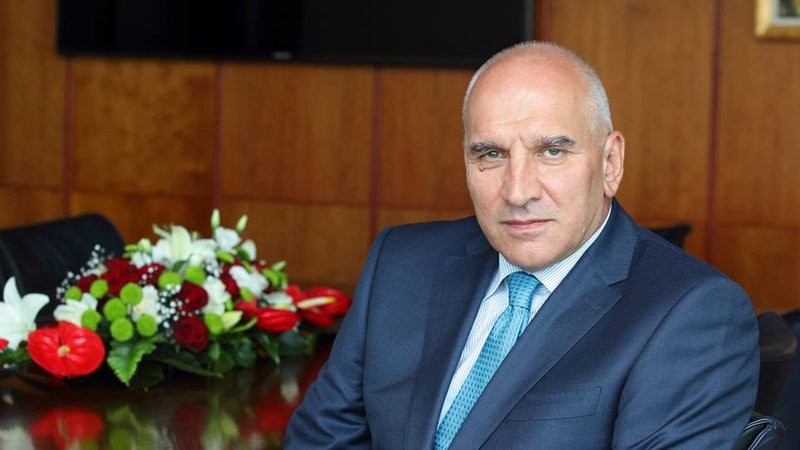
As to the lessons the crisis has been teaching businesses, Levon Hampartzoumian comments, in an interview for the BNR’s Radio Sofia channel:
“It has us focusing more on indexes other than the usual profit, turnover and growth, such as sustainability of business models, customer and employee satisfaction, which, in a situation like this, are growing more and more important for the survival of a given company and the climate in it.”
The former banker also comments the state of banks, describing it as much more stable than during the period of the previous financial crisis of 2008-2011. And adds that this is a good time for anyone who wants to take out credit to do so, though this should be a well-thought out and rational decision:
“If you are sure of your future incomes, then certainly, do take out credit. We are now seeing young families with sustainable work and business prospects looking for bigger homes because they need more room to work from home. What should never be done is to take out credit as a way to cope with long-term difficulties.”
Bringing to the forefront the problem of the mortality rate and the dwindling working population in Bulgaria, some economists are predicting a slow and difficult recovery of the economy. In the current situation businesses should focus on boosting demand among consumers as a real measure for coping with the crisis, economist Rumen Galabinov says. This will bring money back into the economy - for the state and for businesses. Another positive measure would be to reduce VAT not just on food in restaurants but also in stores which would stimulate people to shop more.Giving out vouchers would be another way to boost the public’s purchasing power and would help manufacturers, which means it will help budget revenue. The rate of taxation of medicines should also be reduced as the pandemic has shown that they are essential commodities, the economic analyst says.
An important component of any economy are domestic and foreign investments which lead to job creation. Despite the crisis resulting from the Covid-19 pandemic, the investment climate in this country is favourable. According to Economy Minister Lachezar Borisov during the third quarter we are seeing the first signs that it is improving. Proof that this is to are the new projects, amounting to over 850 million Leva, certified under the Investment Promotion Act, which will create more than 4,000 new jobs. In a TV interview Minister Borisov adduced data concerning the investments since the start of the current term of office of the government in 2017. By 2020 they amounted to 6 billion euro, and during this crisis year, investments in this country amount to 1 billion euro.
Editing by Yoan Kolev
In its “Questions and Answers” section on the introduction of the euro, the Bulgarian National Bank has published a clarification on how the single currency should be denoted and written in accordance with EU regulations. The name of the..

The government approved the draft Law on the 2026 State Budget, as well as the Updated Medium-Term Budget Forecast for the 2026–2028 period. In connection with the introduction of the euro on January 1, 2026, all figures have been prepared in..
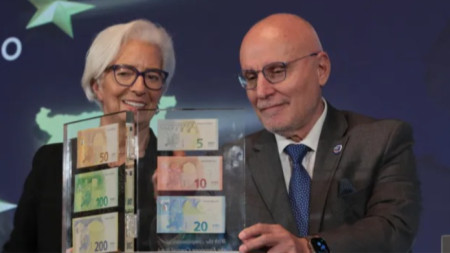
Citizens should remain calm about the introduction of the euro in Bulgaria from January 1, 2026, as the Bulgarian National Bank and commercial banks are ready for all processes related to the currency conversion and distribution of euro banknotes. This..







 Cloudy
 Scattered showers
 Cloudy