4
4
Is it possible for an archeological museum to be the most suitable place for a modern art exhibition? The answer can be found in the spacious central hall of the Archaeological Museum in Sofia, where the exhibition "Lapis specularis. Underground Light” by Spanish artist Miguel Ángel Blanco is presented.
This extremely interesting exhibition consists of 23 book-boxes, in which visitors can find creative compositions of Lapis specularis, known as selenite or moonstone. The boxes are part of the most significant and large-scale project by the artist - Library of the Forest, composed of 1,208 such boxes containing natural elements such as plants, insects and minerals.
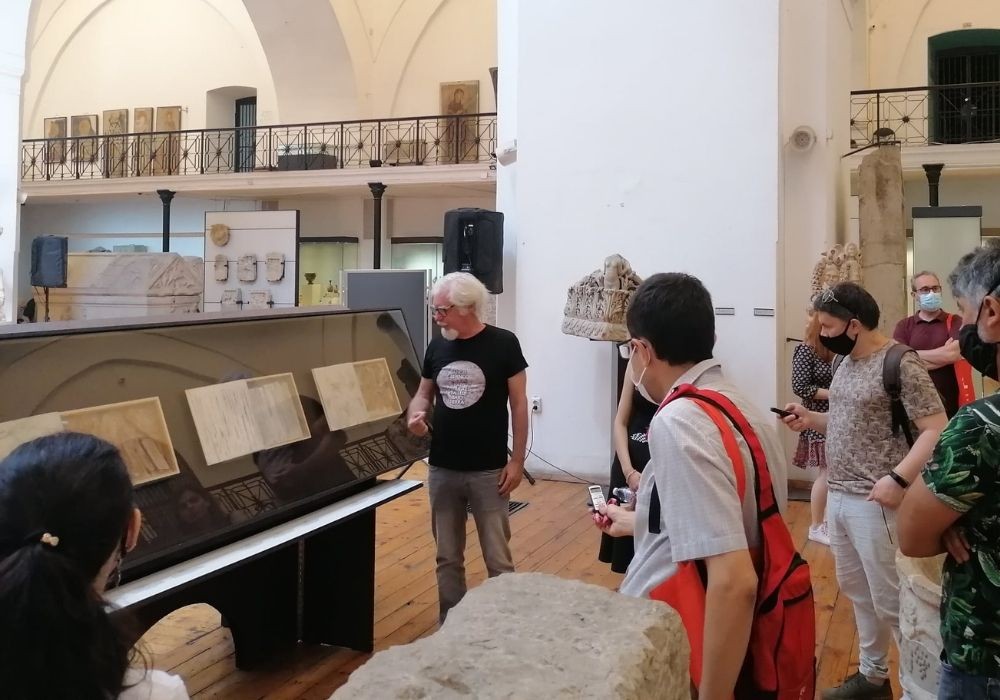
By placing his works in a space linked to archeology, Miguel Ángel Blanco takes us back to the era of the Roman Empire, when modern glass was not yet present in the life of the Romans. With Lapis specularis light began entering the daily lives of the people of that time.
"They used it to make windows, small greenhouses, or used it as glass to monitor the work of bees," Miguel Ángel Blanco has told Radio Bulgaria. The artist points out that as a visual artist he was attracted mostly by the magical and ritual application of selenite. But how did he decide to use this crystal as a material for his works?
“I have studied the realm of minerals very thoroughly. I own a large collection of minerals, perhaps the fourth largest in Spain. I have a very special attitude towards transparent minerals. I have a special collection of mica. They are also very transparent and logically I got acquainted with moonstone. I had gained momentum in the search for transparency and light and that attracted me to the mineral.”

The Romans believed in the enormous magical power of this stone. In what rituals did they use it?
"Apart from hanging pieces of stone on trees to restore their fertility, they wrote curses or wishes on small crystals. They threw these crystals into wells because over time, selenite dissolves and they believed that in entered the underworld.”
Miguel Angel Blanco points out that Lapis specularis was a revolutionary discovery for ancient Rome. But what exactly is it?
"It's crystallized gypsum. In those distant times, glass was not transparent enough and people could not use it for their windows. Roman emperors like Livia and Augustus were the first to see Rome through Lapis specularis glass. The most important mines for selenite were located in Spain. The crystal was transported to Cartagena and from there it was transported to the Roman Empire,” the artist tells us. “I have visited some of these mines. Access to some of them is difficult. This is how I got fragments and pieces that I used to create my works.”
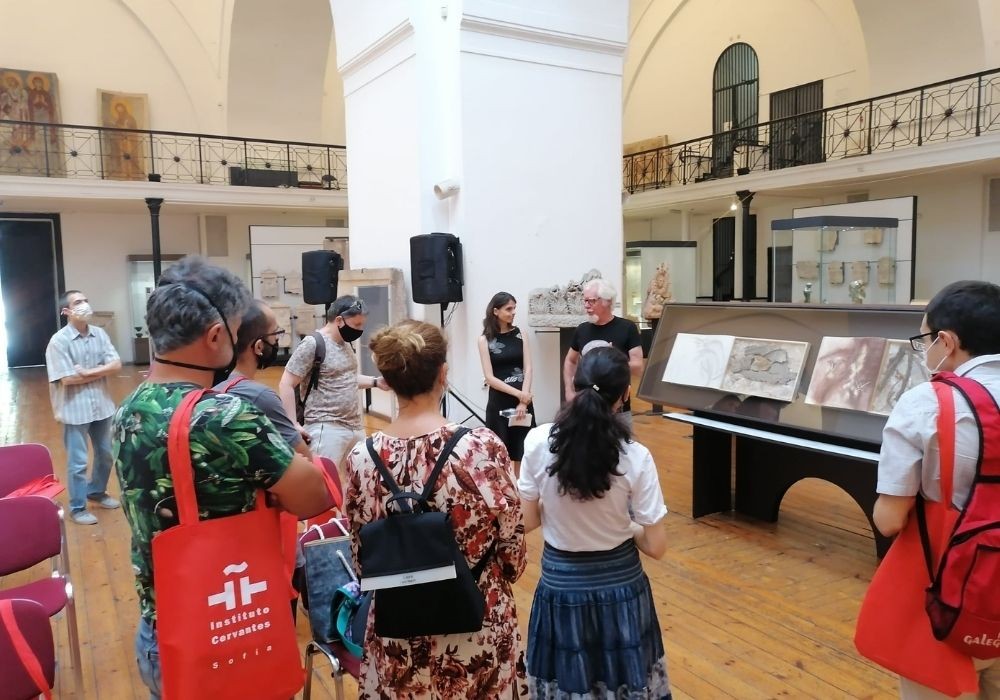
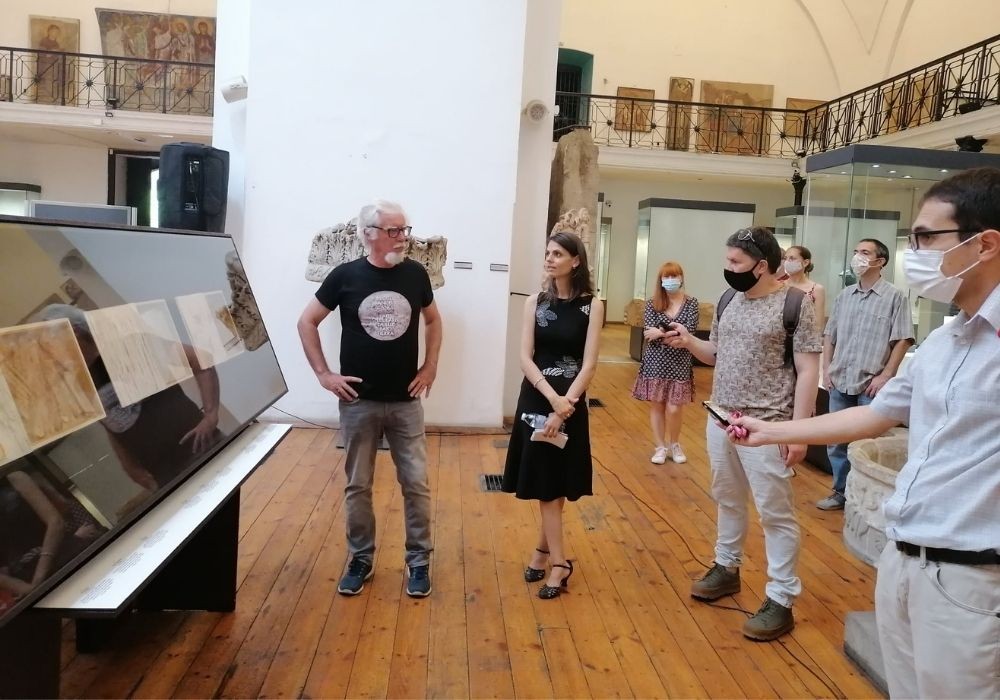
The exhibition “Lapis specularis. Underground Light" is to remain in the Bulgarian capital city until September 26, 2021. The exhibition has already been presented at the National Archaeological Museum in Madrid and is now visiting the Bulgarian capital city, known in ancient times as Serdica, with the help of the Cervantes Institute in Sofia.

English: Alexander Markov
Photos: sofia.cervantes.es


The eighth International Violin Competition “Vasco Abadjiev” will take place in Sofia from 20 to 23 November, attracting record interest. The organizers from the UNESCO Club “Leonardo da Vinci” – Sofia are delighted to have received 32 applications..

Stefan Komandarev’s film “Made in EU” has won the Critics’ Prize at the Arras Film Festival in France, the film’s team announced. The jury was composed of film critics and journalists from France 2, France Inter, Allociné, Konbini, Vanity Fair, and..
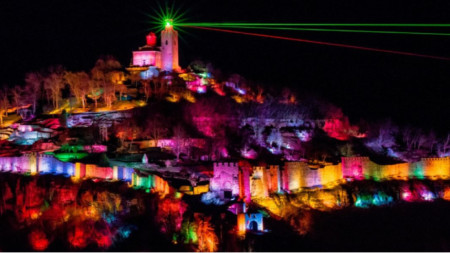
The first Sound and Light multimedia show took place at Tsarevets fortress in Veliko Tarnovo in 1985. The occasion – the 800 th anniversary of the uprising by Peter and Asen that led to the restoration of Bulgarian statehood after two..







 Cloudy
 Cloudy
 Mostly Cloudy