The Day of St. Constantine and Helena in the old style (Julian calendar) is on June 3. In some villages in the Strandzha people still observe the tradition of Nestinarstvo – the fire-dancing rite or dancing barefoot on live embers.
The Nestinar tradition is on the UNESCO List of Intangible Cultural Heritage of Humanity since 2009, and it was part of the former UNESCO Living Human Treasures program until it was closed in 2003.
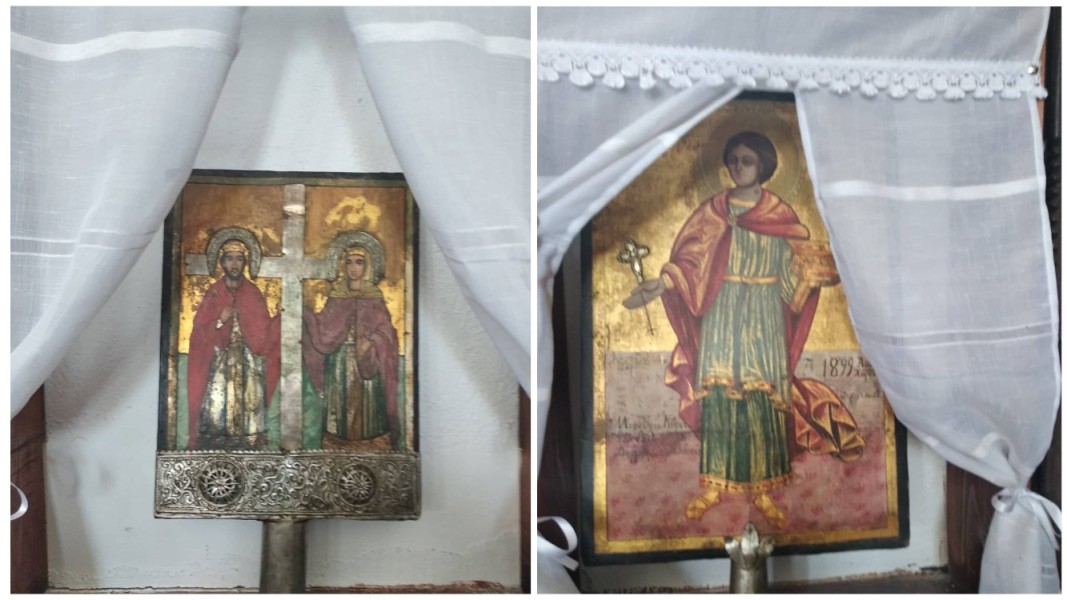
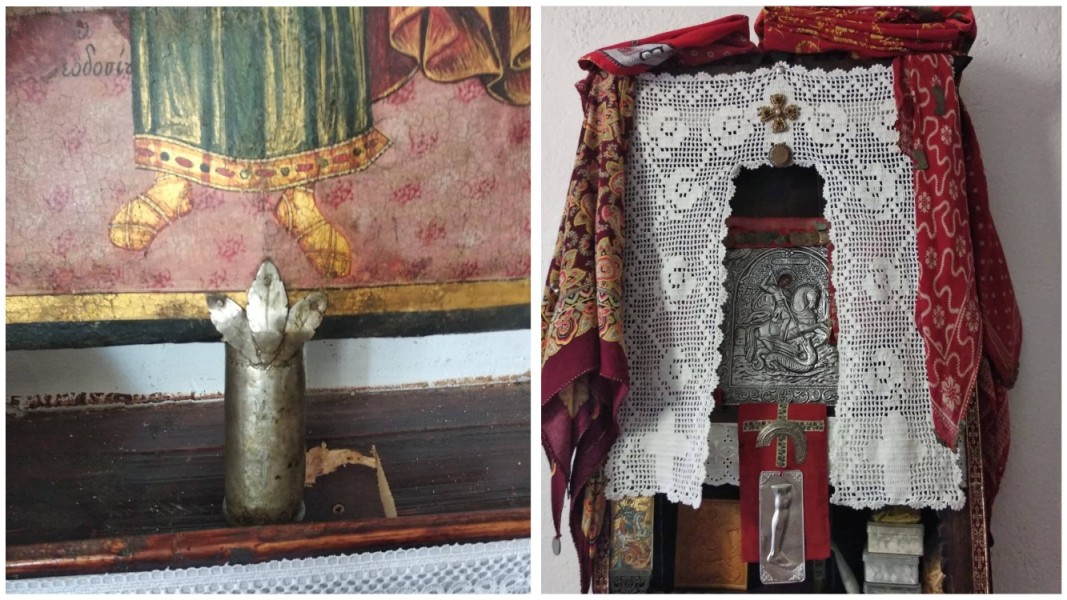
Preparations for the feast of St. Kostadin, as it is called in the Strandzha region, begin at dawn with the "dressing" of the Nestinar icons with bright red cloth decorated with flowers. In a solemn procession, the icons are carried to a sacred spring of healing water, where their handles are ritually washed. This is one of the differences between Nestinar and church icons – handles are a must for Nestinar icons.
In the evening, the Nestinars go to the chapel where the icons of Saints Constantine and Helena and other saints are kept. Gradually the people of the village gather. The music that is played is usually on the drum and bagpipe.
One of the authentic old melodies was recorded by Kostadin Varimezov - bagpipe, and Ognyan Vassilev - drum.
The same tune was notated by Bulgarian composer Marin Goleminov when he visited the village of Bulgari to attended the ritual. The composer, then 30 years old, had already chosen the plot of his dance drama "Nestinarka" and had written part of the music, but none the less he wanted to study the mysterious Nestinarstvo ritual by attending it.
In his memoirs, he describes the powerful effect of the music, the dance, the mystical atmosphere, the deep sense of the roots of this tradition. He threw his camera and tape recorder aside and got caught up in the Nestinar dance. Later, this melody would become one of the main themes in "Nestinarka", a true masterpiece in Bulgarian musical literature.
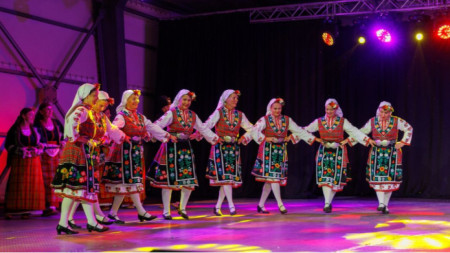
On 22 November, the Association of Bulgarian Folk Ensembles Abroad (ABFEA) will present its project, 'Online Catalogue of Bulgarian Horo and Other Dances', in three European cities: Lyon, Munich and Copenhagen. 'Our goal is to preserve Bulgarian..
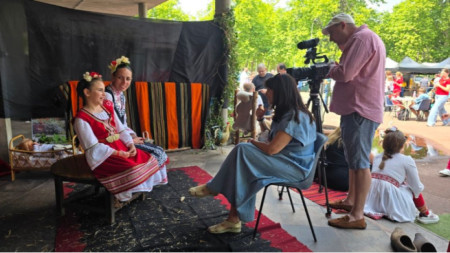
‘The Bulgarian horo is a kind of magic — an enchanted circle that pulses with the unique energy of our spirit, our traditions and our identity,’ says journalist Milena Milotinova, who recently presented her new documentary The Magic of the Bulgarian..

The Eastern Rhodopes come to life in the heart of Sofia – with authentic flavoуrs, music and craftsmanship . Residents of the Bulgaria capital have a chance to immerse themselves in the atmosphere of Momchilgrad Municipality and its cultural and natural..





 Cloudy
 Scattered showers
 Cloudy