The third Sunday after Pascha is observed by the Orthodox Church as the Feast of the Holy Myrrh-bearing Women. Few people, mostly women, stood at the cross and witnessed Christ's crucifixion and death. On the third day, at dawn, the myrrh-bearing women went to the tomb to anoint Christ's body with incense, but instead of a lifeless body they found an empty tomb. As the women wondered what this meant, an angel appeared proclaiming that Christ had risen from the dead: “Why do you seek the living one among the dead. How could you have thought for a moment that He is the hostage of death? Do you not know that he is the principal of life? Rejoice!”.
In the Gospels, women play a central role as eyewitness at Jesus' death, entombment, and in the discovery of the empty tomb. The myrrh-bearing women had no idea of the coming Resurrection and the victory over death. They stood at the Cross only because of their love for Christ, beheld Him and co-suffered with Him.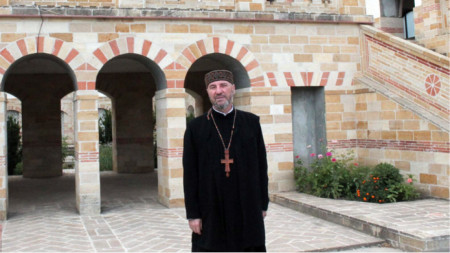
Father Genadiy Martinov is a Bessarabian Bulgarian, born in the village of Devetliy, Odessa province (Ukraine). Two centuries ago, his family lived in Eastern Thrace, near Edirne, but after the end of the Russo-Turkish War (1828–1829), during a period..
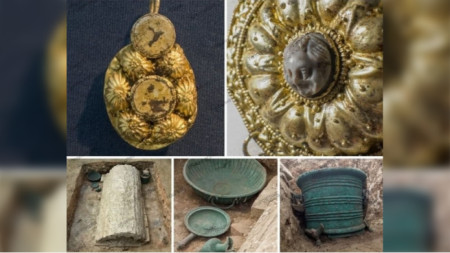
An intact grave of a young woman dating to the beginning of the 2nd century AD has been discovered by archaeologists near the village of Kapitan Petko Voivoda, Topolovgrad Municipality announced. The team that made the discovery is led by Daniela Agre..
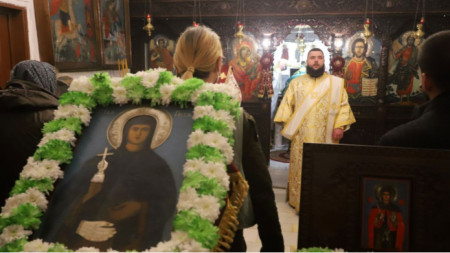
On October 14, the Bulgarian Orthodox church pays homage to Saint Paraskeva, also called St. Petka of Tarnovo and the day is known in Bulgaria as "Petkovden". Saint Petka was born in the 11th century in the town of Epibat, on the Sea of..








 Cloudy
 Overcast, rain