One month after the date is announced of the country’s entry into the Eurozone, shop prices will start to be displayed in both Leva and Euro, and this will continue for one year after the Euro is introduced in the country, the Council of Ministers announced in a Facebook post under the hashtag FactsVersusDisinformation.
Prices will be calculated at the current rate of exchange, in which the Bulgarian Lev is pegged to the euro at BGN 1.95583 to EUR 1, and the rounding off will be up to 2 decimal places. Knowing this, anyone will be able to calculate how much a given commodity is going to cost in euro, and whether its price has gone up after entry into the Eurozone.
The Council of Ministers describes the claims that there will be an inflationary shock after the adoption of the Euro as fake news, and gives as an example Croatia where inflation went down in the first months after its entry into the Eurozone.
There will be no change in incomes or purchasing power, the cabinet says further. “Quite the opposite, incomes are expected to rise gradually because businesses will cut down on their import currency conversion costs, improve their competitiveness and will be able to set more money side for salaries. Salaries and pensions will be recalculated automatically at the same exchange rate, and with the money in euro, people will be able to buy the same things in the same amounts that they can with their current incomes,” the post reads further.
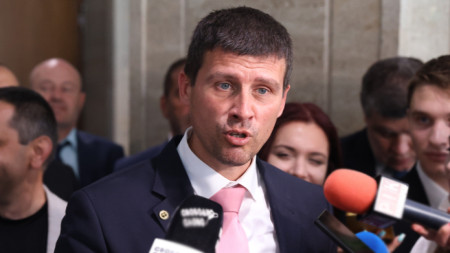
Bulgaria’s Anti-Corruption Commission is investigating a large-scale property fraud and money laundering scheme connected to the 'Historical Park', which is associated with Ivelin Mihaylov, the leader of the Velichie party. Those arrested include the..
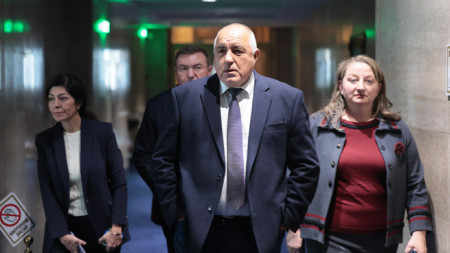
The ruling party and the opposition argued about the procedure for the Budget Committee meeting before the final vote on the 2006 budget . Assen Vassilev, chairman of the We Continue the Change party, attempted to block the committee’s extraordinary..
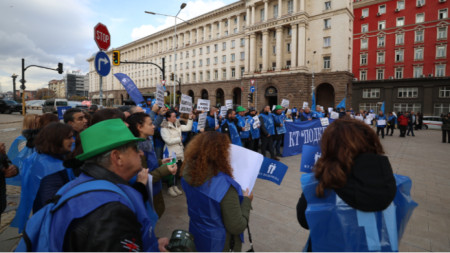
Employees in the agriculture and forestry sector staged a protest in front of the Parliament, demanding higher salaries for workers in departments that are secondary budget administrators. The protest was organized by the National Federation of..







 Cloudy
 Cloudy
 Mostly Cloudy