Podcast in English
Text size
Bulgarian National Radio © 2026 All Rights Reserved

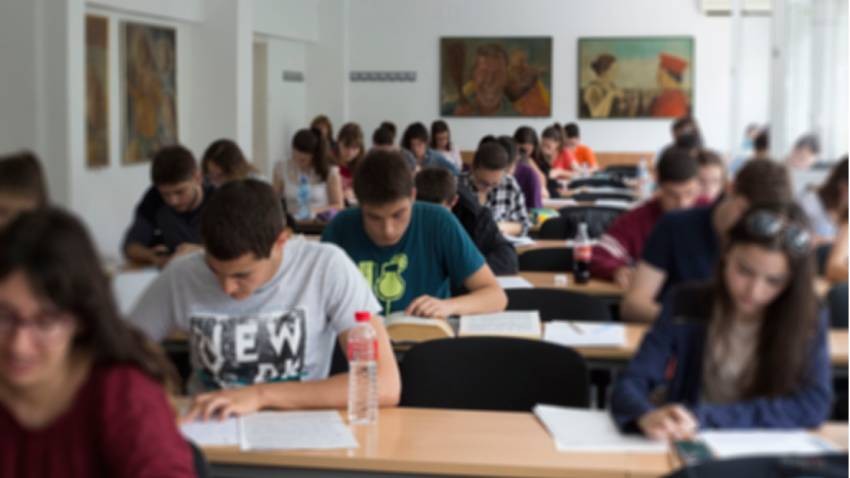
New Bulgarian University presents its French-language study programmes

Photo: BGNES

One of the higher education institutions in Bulgaria that offers majors with the opportunity to study in French is New Bulgarian University (NBU). These include Political Science and Applied Foreign Languages for Administration and Management (in English and a second foreign language). 

Established in the first decade of the 21st century, the Political Science programme initially accepted between 22 and 25 students. Today, however, it comprises between 5 and 10 students per year, enabling them to communicate fully with each other and their professors. 


The sharp decline in the number of students is due to the fact that nowadays many of the prospective students choose European universities, "unlike at the beginning of the century, when a large part of the graduates of secondary education remained to study in Bulgaria," explains in an interview for Radio Bulgaria Chief Assistant Prof. Petya Georgieva, PhD. According to her, students who choose this specialty at NBU are highly motivated to develop their language skills, but also to receive a high-quality education in the field of political sociology, international organizations, relations and diplomacy.

"The main staff is made up of Bulgarian lecturers, but most of them have extensive international experience. We don't have permanent foreign lecturers, but we have very busy cooperation with our partners from different French and Belgian universities who come here within the Erasmus+ programme. In addition, we have about 10 French students studying in our programme every year, again within the framework of this cooperation. So our students are in constant contact with the French students, which allows them not only to develop their language skills, but also to start good friendships that last over time," describes the benefits of such an educational programme Chief Assistant Prof. Petya Georgieva. 


Graduates of this specialisation are employed in a variety of professional fields - in various international organisations, the Ministry of Foreign Affairs, the NGO sector and others. 

The specialisation "Applied Foreign Languages for Administration and Management (in English and a second foreign language)", established in 2014, provides another opportunity to develop skills and competences in the field of English and a second foreign language chosen by the student - French, German, Spanish or Russian.

In the first two years of their studies, students learn practical English and their chosen second foreign language with the relevant specialized vocabulary in the field of administration and management, and in the second two years they consolidate the acquired skills. After that, about half of them start working as translators:


"They have courses in computer-assisted translation, where they learn the different types of translation software, because translation agencies work massively in this way and have very large volumes of texts. And they actually need to be aware of how they should not just put the test in Google Translate, which is what people do, but to know how these algorithms of computer-assisted translation and those of artificial intelligence work", explained in an interview for Radio Bulgaria Assoc. Prof. Emanuela Tchitchova.  "The goal is to be able to intervene where necessary, because in the field of translation, there is no way not to have human intervention. Part of the translation training goes through looking at these various software tools, learning about neural networks and trying out ChatGPT, but they know that the translator remains the last resort before releasing the translated text." 

The remaining students are starting out as administrators, but there is also an opportunity to get advice from faculty on how to start their own private businesses. 

Ms. Tchitchova also announced another opportunity that students at NBU will have - a master's programme called "Technologies in Translation and Interpreting":


"It has gone through a successful pilot mode and has been welcomed with interest by the students. Now we are waiting for its accreditation to continue their admission. It again has a focus on translation software, but with a focus on looking in more detail at the mechanisms behind it."

Students from all over the world are enrolled in the programme. "We have students from the Middle East, Russia, Ukraine, Turkey, Greece.  In 2016-18, when we were admitting 40-50 students, there was a large Nigerian group, but at the start of the Covid pandemic they stopped coming. Since then, the students are from the Balkans and countries closer to us," we learn from Assoc. Prof. Emanuela Tchitchova.


English publication by Rositsa Petkova


Последвайте ни и в Google News Showcase, за да научите най-важното от деня!
Listen to the daily news from Bulgaria presented in "Bulgaria Today" podcast, available in Spotify.

More from category

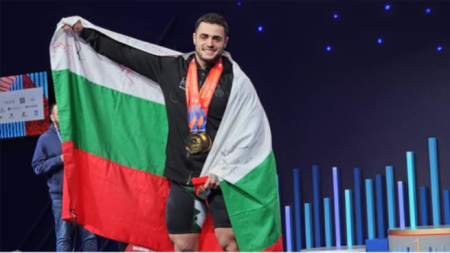
Bulgarians in London to meet Olympic weightlifting champion Carlos Nasar

Three-time world champion and Olympic weightlifter Carlos Nasar will be holding a special event with the Bulgarian community in London on 23 November.   According to the organisers, it will be an open conversation in which Nasar will discuss his journey..

published on 11/17/25 2:55 PM

Caritas reaches out to the poor and suffering

On 16 November, we celebrate Caritas Day, when we honour the Catholic Church’s charity organisation that brings hope to those in need through care and acts of mercy . It reminds us that financial gain is not what matters most. What truly matters is..
published on 11/16/25 10:15 AM

A new museum in Plovdiv traces the history of money

The first museum of investment gold is welcoming visitors in Plovdiv who want to learn more about the history of money and its connection to gold – from the birth of gold, its cosmic origin, and its journey to Earth, to how this precious metal has..

published on 11/16/25 6:55 AM