Passion Week is the last week before Easter. It is also the most austere week of fasting at the end of the long Great Lent, which prepares the faithful for Christ's Resurrection. It begins after the Sunday on which Christians celebrate the Lord's entry into Jerusalem, also known as Palm Sunday or Vrabnitsa (Willow Sunday) in Bulgaria, and ends on the day of the Resurrection of Christ - Easter.
Each day of Passion Week is called "Great" - Great Monday, Great Tuesday, and so on. Each day commemorates an important event - something that Jesus Christ did for humanity, or his teachings. In this way, Christians gradually prepare to meet and experience the holiest of Christian holidays - the Resurrection of Christ.
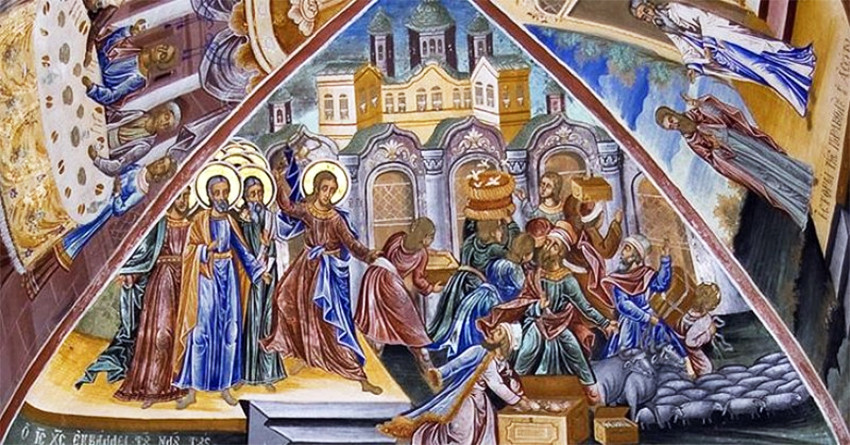
On Great Monday, the Evangelists tell us how the Son of God entered the Temple in Jerusalem and found it full of merchants. Filled with anger, Jesus overturned their tables and drove them out, because the Temple is a house of prayer, not a marketplace.
On this day the Church honours the Righteous Joseph the Fair, of whom the Bible tells us that he was one of the 12 sons and the favourite child of the Old Testament Patriarch Jacob, who lived around the 18th century BC. In ancient Judea, patriarchs were the leaders of the Sanhedrin - the "supreme Jewish court".
Joseph was sold by his envious brothers to traders who travelled to Egypt. There, in a foreign land, he suffered many hardships, but Pharaoh made him second in power and status in the entire kingdom.
Like the righteous Joseph, Jesus Christ was betrayed by His fellow Jews to the Roman oppressors, was tortured, and suffered for the sins of humanity.
On this day, the Church also recalls the symbolism of the barren fig tree that withered after being cursed by the Lord. "Every tree that bringeth not forth good fruit is hewn down, and cast into the fire," he said.
In the same way, Christians are called to bear spiritual fruit by striving to be good, avoiding evil, filling themselves with virtue and growing in faith.
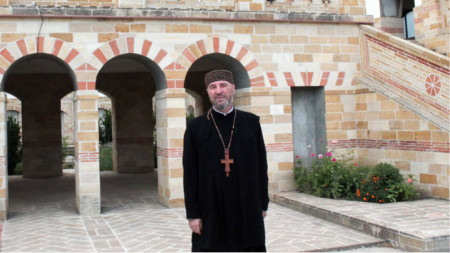
Father Genadiy Martinov is a Bessarabian Bulgarian, born in the village of Devetliy, Odessa province (Ukraine). Two centuries ago, his family lived in Eastern Thrace, near Edirne, but after the end of the Russo-Turkish War (1828–1829), during a period..
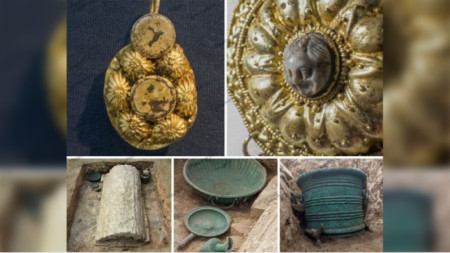
An intact grave of a young woman dating to the beginning of the 2nd century AD has been discovered by archaeologists near the village of Kapitan Petko Voivoda, Topolovgrad Municipality announced. The team that made the discovery is led by Daniela Agre..
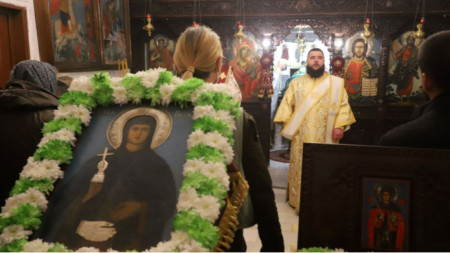
On October 14, the Bulgarian Orthodox church pays homage to Saint Paraskeva, also called St. Petka of Tarnovo and the day is known in Bulgaria as "Petkovden". Saint Petka was born in the 11th century in the town of Epibat, on the Sea of..






 Cloudy
 Cloudy
 Mostly Cloudy