The Executive Board of the International Monetary Fund (IMF) has concluded the 2025 Article IV Consultation with Bulgaria. According to the IMF’s procedure for assessments and recommendations, domestic demand is driving a robust expansion of the Bulgarian economy. The near-term growth outlook is positive.
GDP growth is projected to remain around 3 percent in 2025 and 2026, supported by domestic consumption and public investment funded under the Recovery and Resilience Plan. The IMF expects that headline inflation is projected to average around 3½ percent in 2025 and 2026, before declining, reported BTA. Risks to the outlook arise mainly from domestic policy uncertainty, domestic demand pressures, and heightened external volatility.
Edited by Ivo IvanovPublished and translated by Kostadin Atanasov
Photo: IMF
Less than 100 days remain until Bulgaria joins the eurozone, and this is another reason to talk about the incomes of people in Bulgaria, about the Bulgarian economy, about foreign investments and about the domestic labour market which reacts the..

At the end of September, with a little over three months to go until the Rubicon in Bulgarian public finance - 1 January, 2026, when the country will officially leave the currency board and adopt the single European currency, the euro – issues..
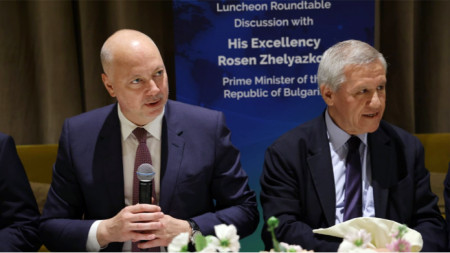
Bulgaria is among the most dynamic and promising economies in Southeastern Europe, said Prime Minister Rosen Zhelyazkov. He participated in a luncheon roundtable discussion in New York organized by the Delphi Economic Forum and the Business Council..






 Rain
Rain Mostly Cloudy
 Cloudy
 Overcast, rain
 Scattered showers