Moody’s credit ratings agency has affirmed the long-term foreign and local currency sovereign credit ratings on Bulgaria at ‘Baa1’ with a stable outlook, the Ministry of Finance announced.
According to the agency, the country can still meet its target by adopting the euro next year, but said that the country’s adoption of the euro was “likely to be delayed at least until 2025.”
While the rate of growth is expected to slow to 1.4% of GDP in 2023, Moody's expects that this will be among the more robust growth rates among European sovereigns this year, and that growth will pick up to 2.9% in 2024. According to the credit ratings agency inflation will be high but declining towards 6.0% by the end of 2023, from 14.3% at the end of 2022.
Moody’s expects that the headline deficit will remain broadly stable around 3% of GDP in 2023 and 2024.

In its “Questions and Answers” section on the introduction of the euro, the Bulgarian National Bank has published a clarification on how the single currency should be denoted and written in accordance with EU regulations. The name of the..

The government approved the draft Law on the 2026 State Budget, as well as the Updated Medium-Term Budget Forecast for the 2026–2028 period. In connection with the introduction of the euro on January 1, 2026, all figures have been prepared in..
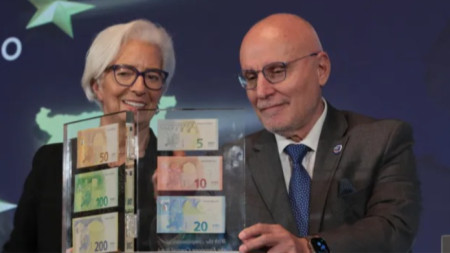
Citizens should remain calm about the introduction of the euro in Bulgaria from January 1, 2026, as the Bulgarian National Bank and commercial banks are ready for all processes related to the currency conversion and distribution of euro banknotes. This..








 Rain
Rain Mostly Cloudy
 Cloudy
 Overcast, rain
 Scattered showers