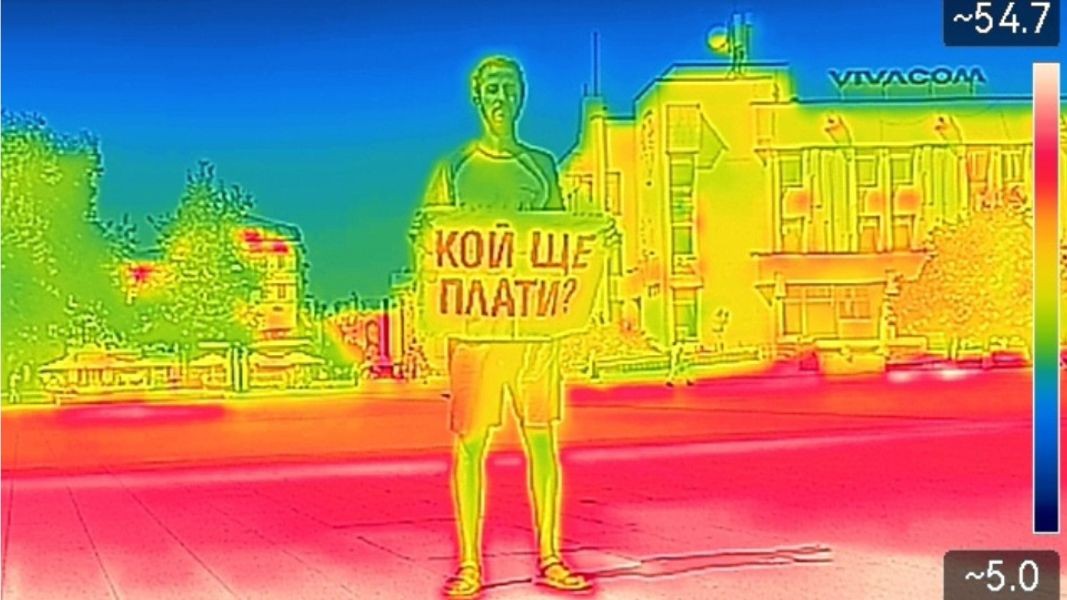
During the hottest days of summer, members of Greenpeace travel around the country to show how hot it really is in the urban environment. With the help of thermal cameras, they detect the temperature around the buildings, which in places like Plovdiv reaches up to 70°C. The experiment wants to draw attention to the problem of lack of green areas in cities.
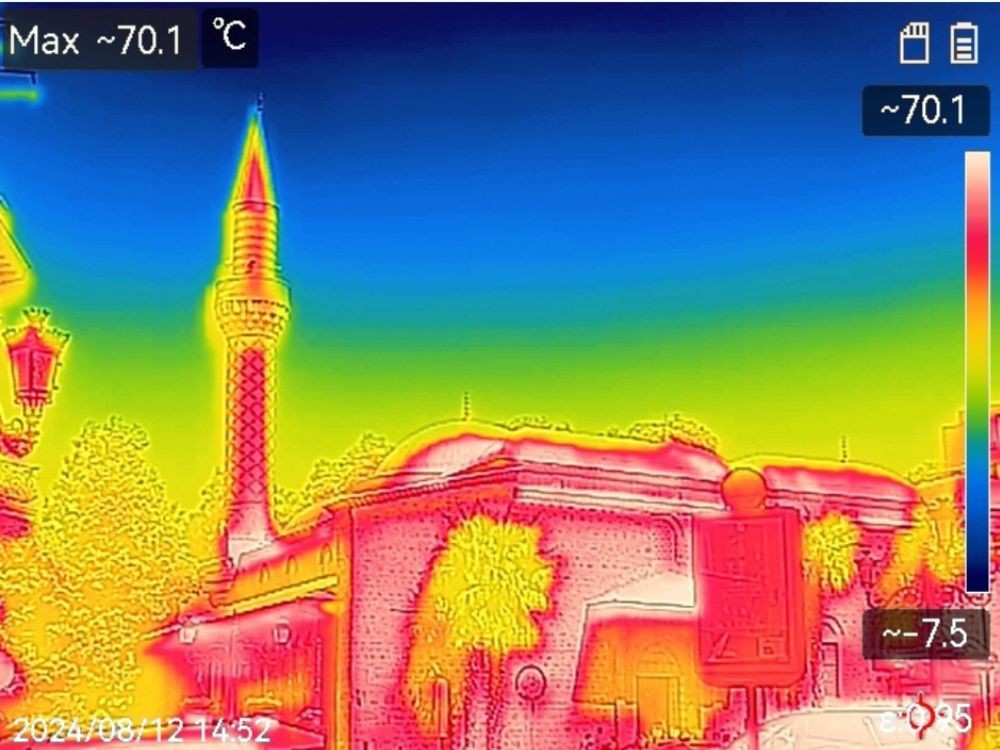
The main goal of these studies, according to director of Greenpeace Bulgaria, Meglena Antonova, is to show that cities are getting hotter because of the urban heat island effect. This extra heat is caused by exhaust fumes, dark asphalt and building materials and lack of vegetation. Climate change is already exacerbating the problem.
According to a recent study by the Barcelona Institute of Global Health, trees can reduce the death rate during heat waves in cities by one third.
Photos: Greenpeace-Bulgaria

The Bulgarian Embassy hosted the second concert of the 17th season of the Bulgarian Music Society in Washington. On 14 November, guests enjoyed a unique show by two world-class artists, both originally from Bulgaria: Desi Jordanoff, a folk dance master,..

Generation Z students (born 1995–2012) are widely using artificial intelligence in their learning, with teachers reporting that more than 85% complete homework and study with the help of digital assistants. Children tend to see AI as a partner..

This year, Christmas has "arrived" in Sofia as early as November with the aroma of mulled wine, cinnamon and festive magic. Radio Bulgaria recommends that you visit some Christmas spots in the Bulgarian capital city: For those most impatient to..







 Cloudy
 Cloudy
 Mostly Cloudy