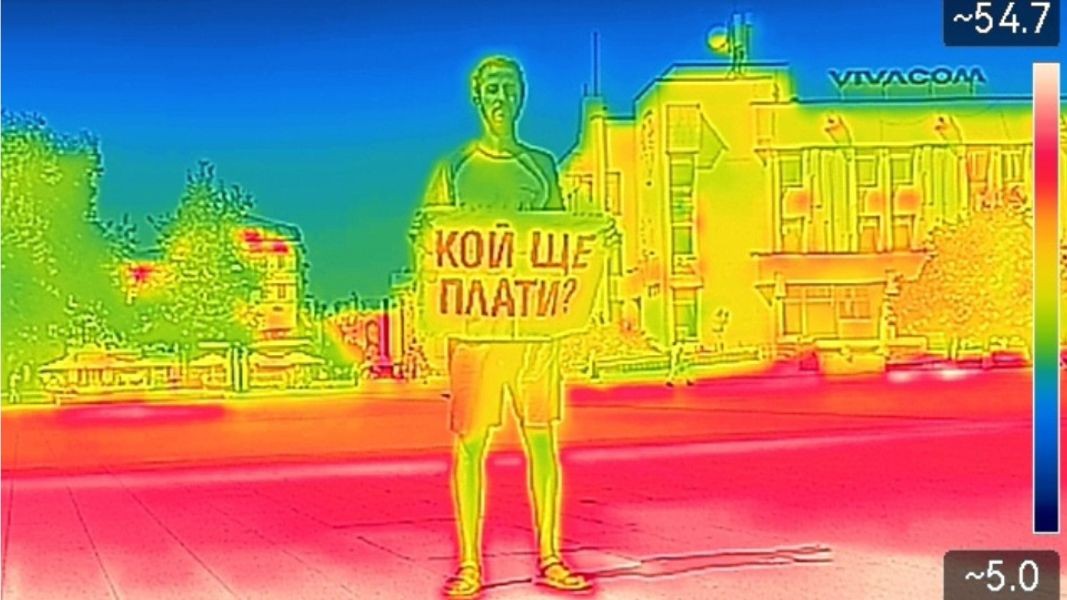
During the hottest days of summer, members of Greenpeace travel around the country to show how hot it really is in the urban environment. With the help of thermal cameras, they detect the temperature around the buildings, which in places like Plovdiv reaches up to 70°C. The experiment wants to draw attention to the problem of lack of green areas in cities.
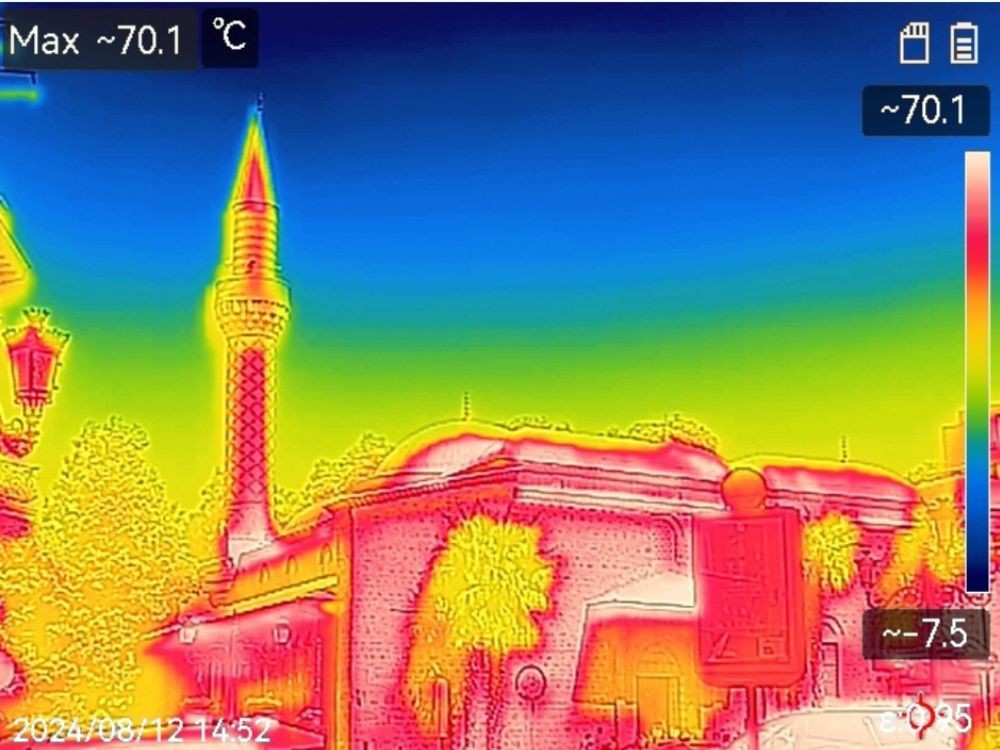
The main goal of these studies, according to director of Greenpeace Bulgaria, Meglena Antonova, is to show that cities are getting hotter because of the urban heat island effect. This extra heat is caused by exhaust fumes, dark asphalt and building materials and lack of vegetation. Climate change is already exacerbating the problem.
According to a recent study by the Barcelona Institute of Global Health, trees can reduce the death rate during heat waves in cities by one third.
Photos: Greenpeace-Bulgaria

Bulgaria celebrates National Reading Day on the third Friday of November. The Reading Foundation is leading the initiative under the motto: “Read. For Real”. According to the OECD's PISA 2022 study, 53% of 15-year-old students in Bulgaria have..

On November 21–22, 2025, the 11th edition of the Career Fair will take place at the John Atanasov Hall in Sofia Tech Park. The forum aims to support early career orientation for young people in Bulgaria and is organized by the Bulgarian Global..

From fear and doubts to joy and support – Bulgarians react differently to the upcoming introduction of the euro on January 1, 2026. For some, it is a logical step towards Bulgaria’s integration into the EU with promises of stability..







 Cloudy
 Cloudy
 Mostly Cloudy