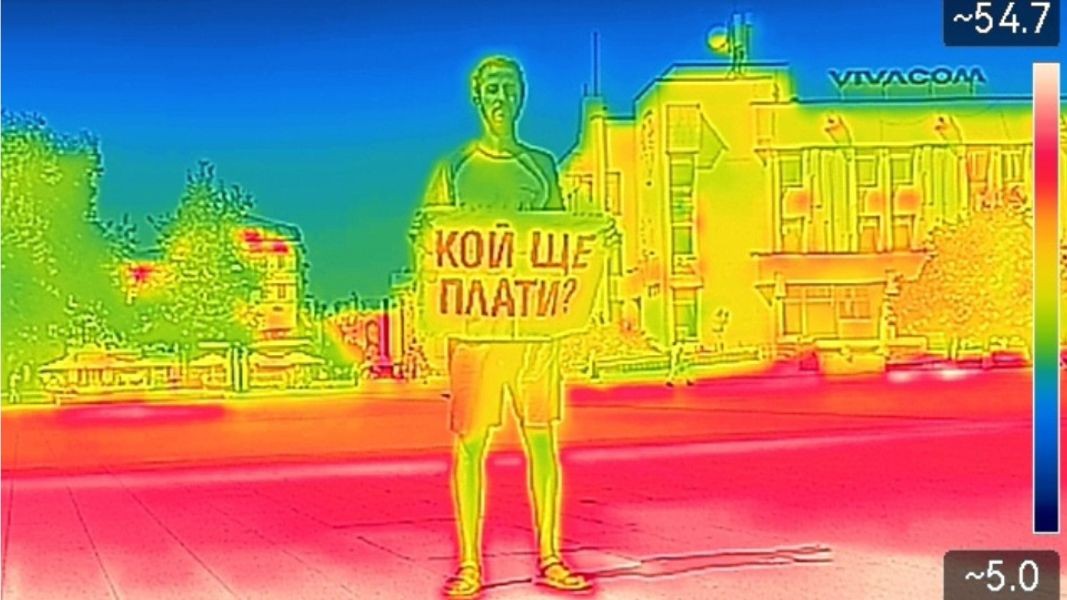
During the hottest days of summer, members of Greenpeace travel around the country to show how hot it really is in the urban environment. With the help of thermal cameras, they detect the temperature around the buildings, which in places like Plovdiv reaches up to 70°C. The experiment wants to draw attention to the problem of lack of green areas in cities.
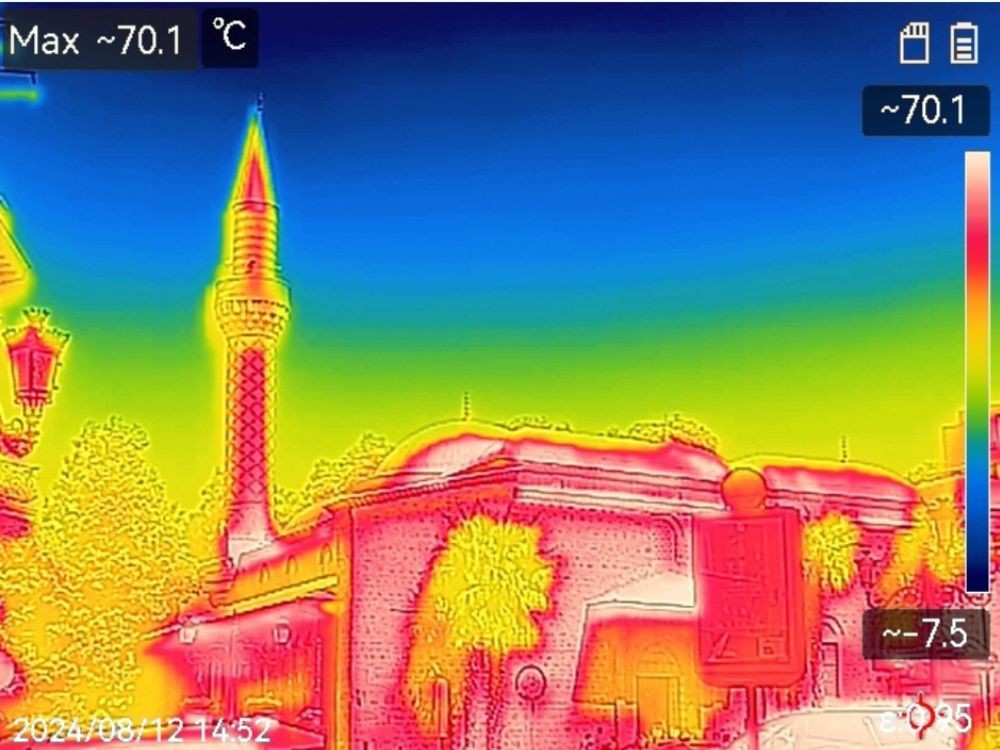
The main goal of these studies, according to director of Greenpeace Bulgaria, Meglena Antonova, is to show that cities are getting hotter because of the urban heat island effect. This extra heat is caused by exhaust fumes, dark asphalt and building materials and lack of vegetation. Climate change is already exacerbating the problem.
According to a recent study by the Barcelona Institute of Global Health, trees can reduce the death rate during heat waves in cities by one third.
Photos: Greenpeace-Bulgaria
Despite being in Bulgaria’s poorest region, the North-West, Vratsa Province ranks among the top three in the country for economic development. According to 2023 data from the National Statistical Institute (NSI), it shares third place with Varna on the..

Bulgarian artists will take part in the festive Christmas concert in Stockholm , organised with the European Commission's representation and embassies , the Bulgarian embassy in the Swedish capital announced on Facebook. The event is scheduled for 8..
The project “The Charisma of Bulgarians” is, in essence, a bridge between different worlds . With it, Dimitrinka Yordanova Komanduci - psychologist, psychotherapist, vocal coach, and author of “Your Voice Can Change Your Life” - aims to create a..







 Cloudy
 Cloudy
 Mostly Cloudy