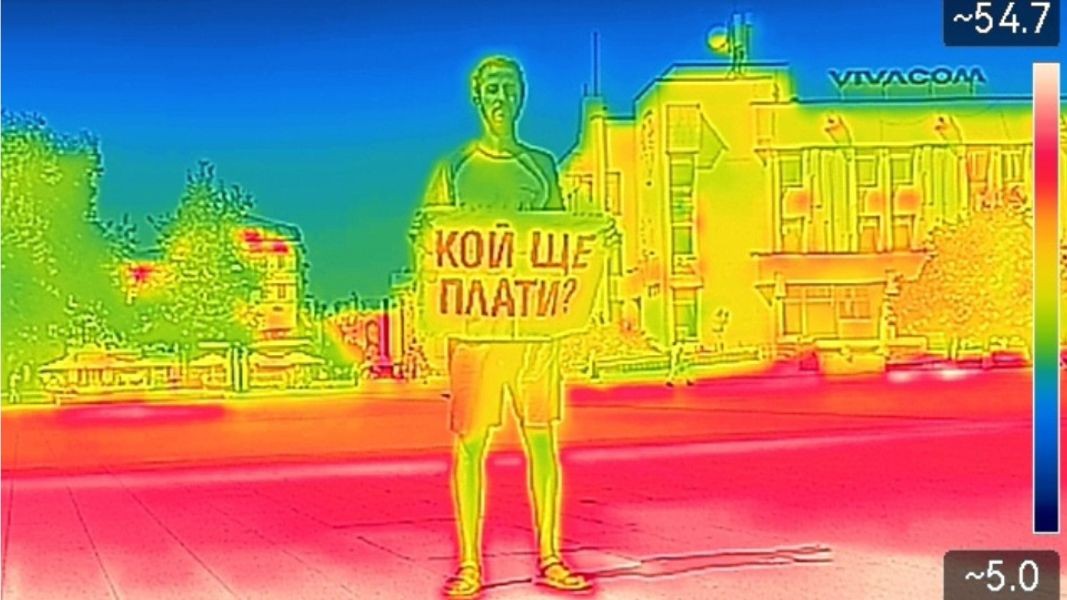
During the hottest days of summer, members of Greenpeace travel around the country to show how hot it really is in the urban environment. With the help of thermal cameras, they detect the temperature around the buildings, which in places like Plovdiv reaches up to 70°C. The experiment wants to draw attention to the problem of lack of green areas in cities.
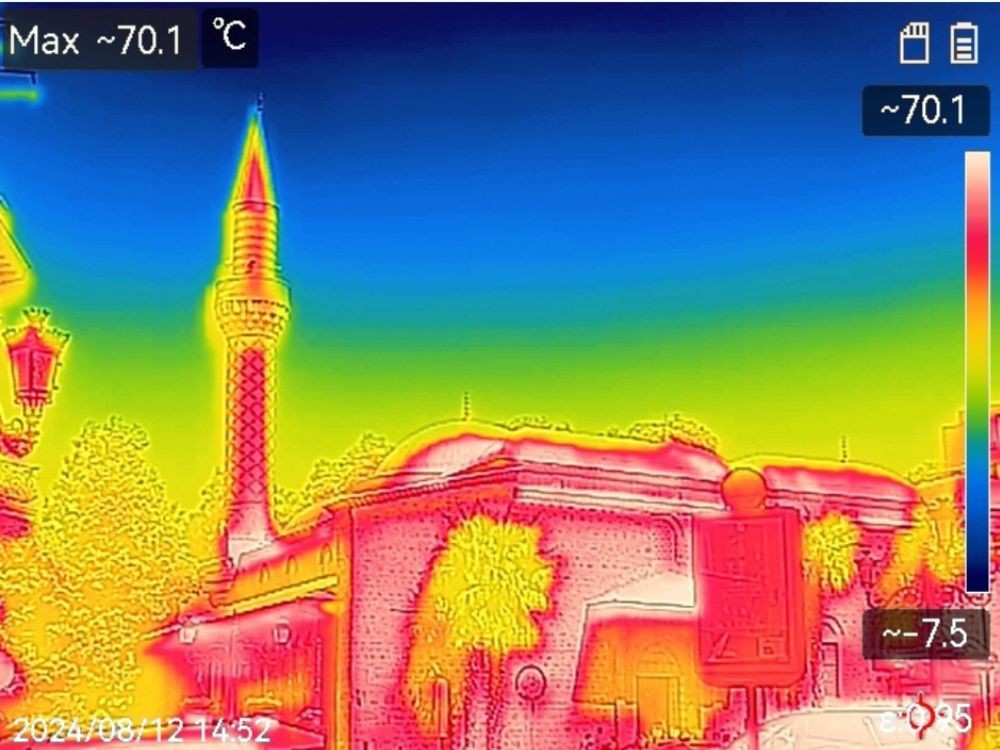
The main goal of these studies, according to director of Greenpeace Bulgaria, Meglena Antonova, is to show that cities are getting hotter because of the urban heat island effect. This extra heat is caused by exhaust fumes, dark asphalt and building materials and lack of vegetation. Climate change is already exacerbating the problem.
According to a recent study by the Barcelona Institute of Global Health, trees can reduce the death rate during heat waves in cities by one third.
Photos: Greenpeace-Bulgaria
Timișoara, a large multicultural city in western Romania, is the center of the historical community of the Banat Bulgarians . The members of this community are descendants of settlers from the Bulgarian lands nearly three centuries ago, who have..

In Gabrovo – a city in the geographical center of Bulgaria, once described as the Bulgarian Manchester, but today facing demographic challenges – there are young people who believe that the future can be better and that this largely..

For 15 years, Stela Nedkova has been living in Brussels . After completing her education in Bulgaria, she decided to test herself in a different reality to see whether she could handle life’s challenges on her own, without her parents’ help. Stela faced..






 Cloudy
 Cloudy
 Mostly Cloudy