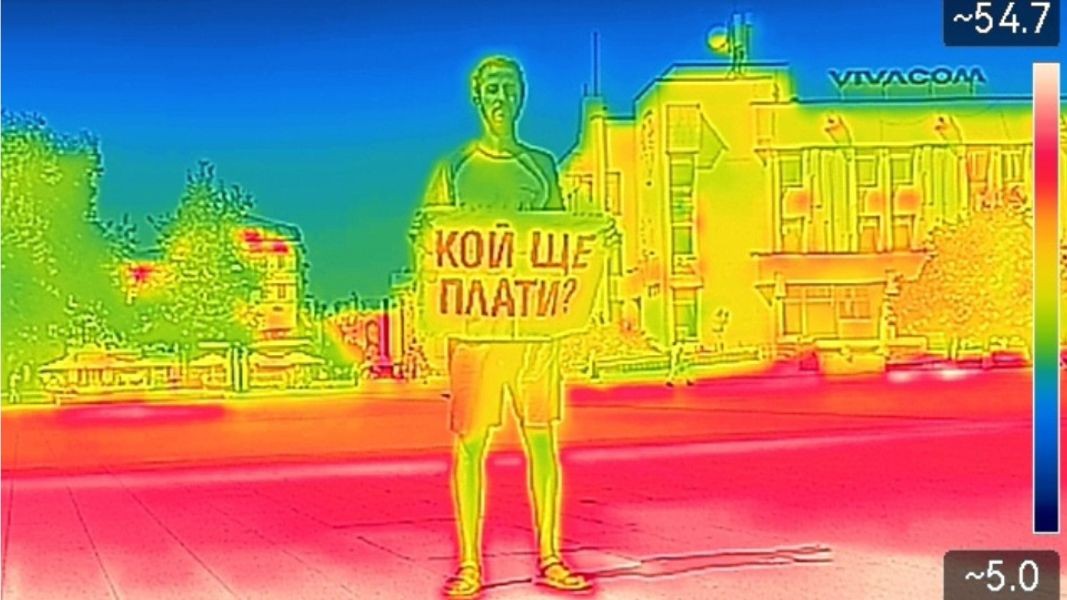
During the hottest days of summer, members of Greenpeace travel around the country to show how hot it really is in the urban environment. With the help of thermal cameras, they detect the temperature around the buildings, which in places like Plovdiv reaches up to 70°C. The experiment wants to draw attention to the problem of lack of green areas in cities.
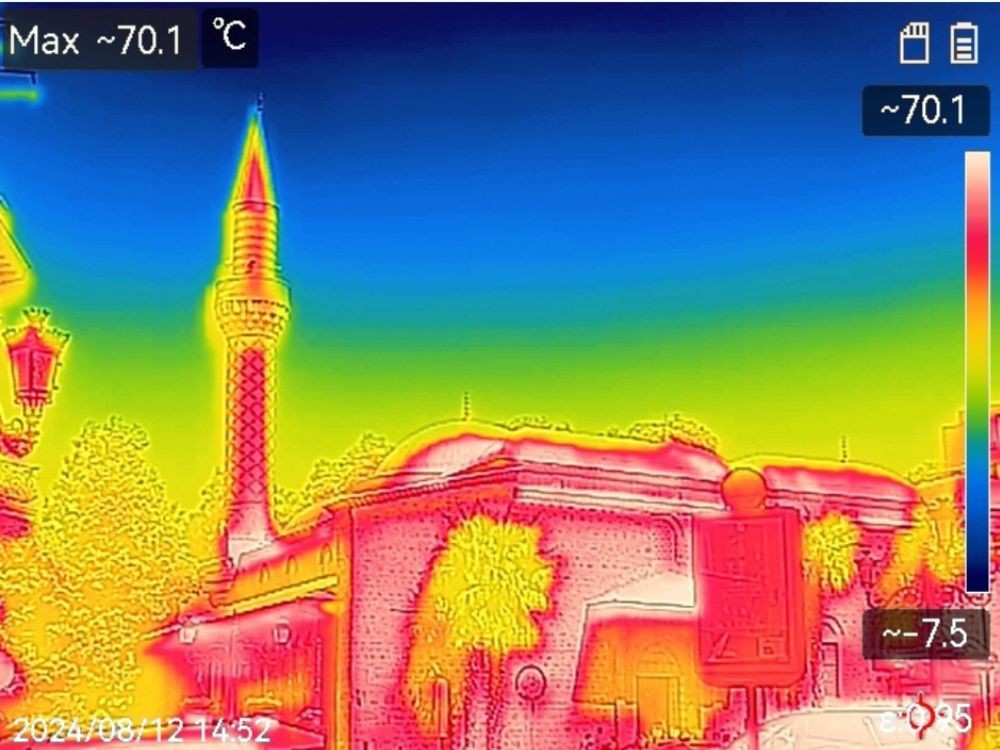
The main goal of these studies, according to director of Greenpeace Bulgaria, Meglena Antonova, is to show that cities are getting hotter because of the urban heat island effect. This extra heat is caused by exhaust fumes, dark asphalt and building materials and lack of vegetation. Climate change is already exacerbating the problem.
According to a recent study by the Barcelona Institute of Global Health, trees can reduce the death rate during heat waves in cities by one third.
Photos: Greenpeace-Bulgaria

Security cameras captured a bear in a residential neighborhood of the town of Karlovo a few days ago. The predator came down to the houses in the northern part of the town and walked calmly along the streets until it was startled by a passing car...

The Day of the Christian Family is an annual event that brings Bulgarians in Hamburg together. 2025 is no exception, with invitations having been circulating on social media for some time, as this year marks the 20th anniversary of the establishment of..

Kosovo is heading for early elections after nine months of failed attempts to form a government Kosovo President Vjosa Osmani has dissolved Parliament, Koha Ditore reports. This decision came after the proposed cabinet, put forward by Glauk..







 Cloudy
 Cloudy
 Mostly Cloudy